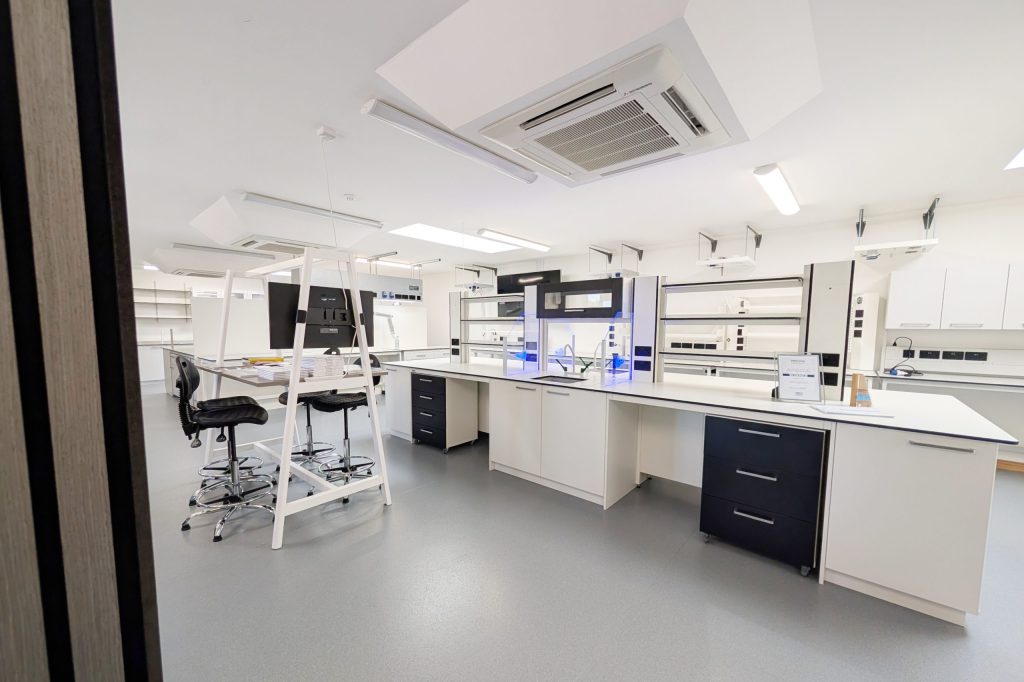
Laboratories have never been entirely static environments, but the pace of change is accelerating. New technologies are introduced, research priorities evolve, and teams adopt new ways of working. Across pharmaceutical and research settings, automation and artificial intelligence are enabling organisations to test concepts, analyse data, and make informed decisions at a speed that was previously unattainable.
The challenge is no longer simply ensuring that a laboratory meets today’s requirements. Increasingly, the focus is on whether the space can continue to support future needs as demands, technologies, and workflows evolve.
This is where flexible laboratory design becomes invaluable, providing the adaptability needed to accommodate change without compromising efficiency, performance, or productivity.
Research is changing faster than laboratory spaces
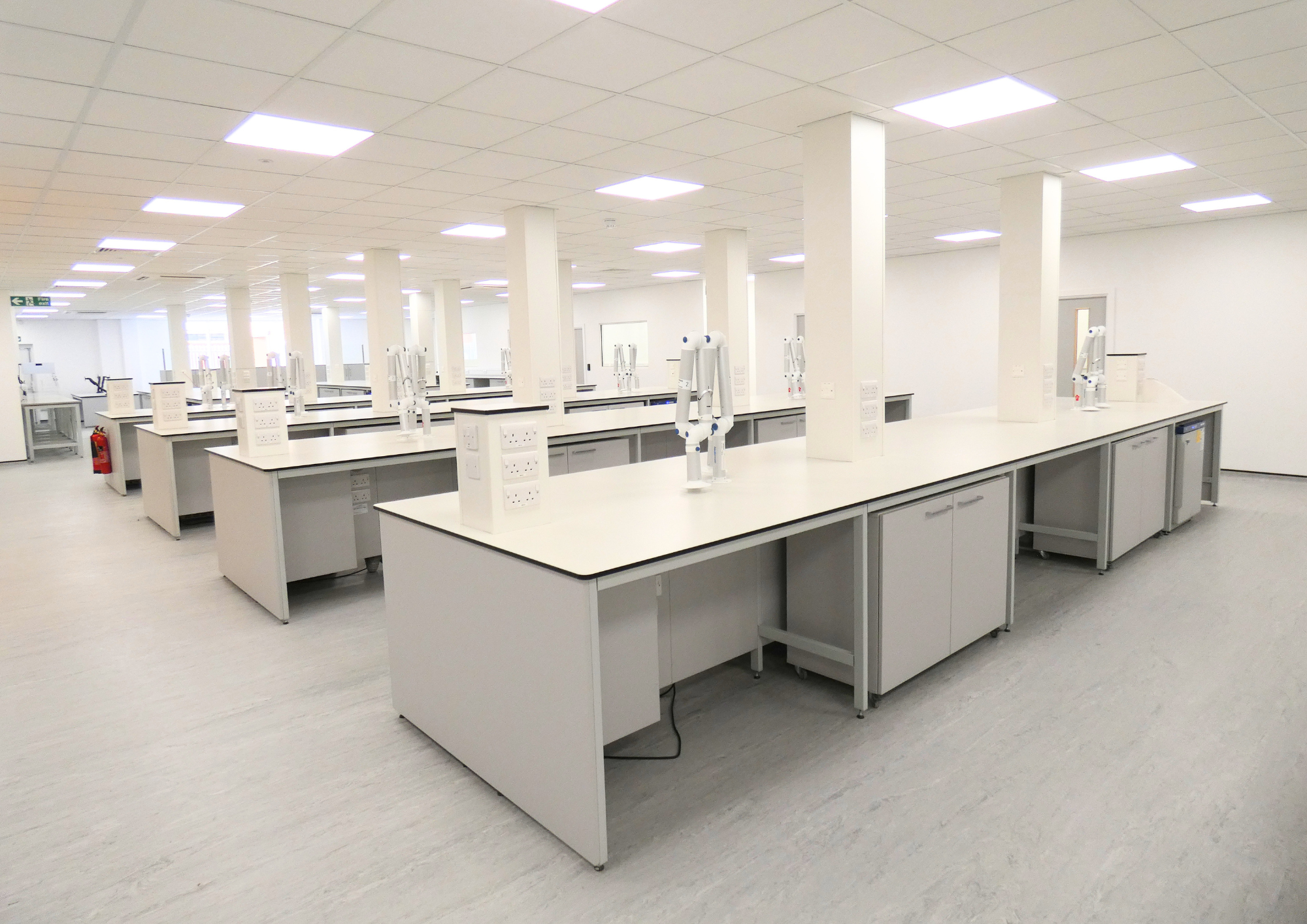
Traditional laboratories were often designed around fixed benching systems and well-established workflows. When the same processes were carried out day after day, there was little need to adapt the physical layout.
For many research and pharmaceutical organisations, that is no longer the case.
Advances in automation enable teams to conduct more experiments in a shorter timeframe, while artificial intelligence can help identify the most promising avenues for further investigation. As a result, research programmes that once followed a relatively predictable path over several years may now evolve or pivot much earlier in the process.
When priorities change, the laboratory environment must be able to respond. Equipment may need to be relocated, workspaces reconfigured, and services adapted to support new methods, technologies, or research objectives.
As InterFocus Technical Director Marcus Cannon explains: “The one thing AI can’t do is move a bench. YET!”
While technology can accelerate decision-making and shape the direction of research, the physical laboratory must be sufficiently adaptable to support those changes. This is why flexibility has become such a critical consideration in modern laboratory design.
What does a flexible laboratory actually mean?
Flexibility in laboratory design is about far more than simply placing furniture on castors.
A truly flexible laboratory is designed with future change in mind, considering how workbenches, equipment, storage systems, and service connections may need to adapt throughout the lifespan of the facility. The objective is to facilitate future modifications efficiently while maintaining the laboratory’s current performance, safety, and functionality.
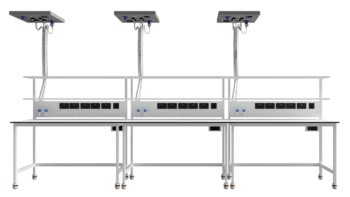
InterFocus’s IFLEX modular laboratory system has been developed to support evolving laboratory requirements. Offering an alternative to fully fixed installations, it enables laboratories to adapt more easily as research activities, technologies, and operational needs change over time.
The most effective approach will vary depending on the application. While some laboratory areas can benefit significantly from enhanced flexibility, others may require fixed furniture and infrastructure to support specialised equipment, processes, or service requirements.
The key is to identify where change is most likely to occur and incorporate adaptability into the design from the outset. By planning ahead, organisations can create laboratory environments that remain efficient, functional, and fit for purpose well into the future.
Start with the work and not the furniture
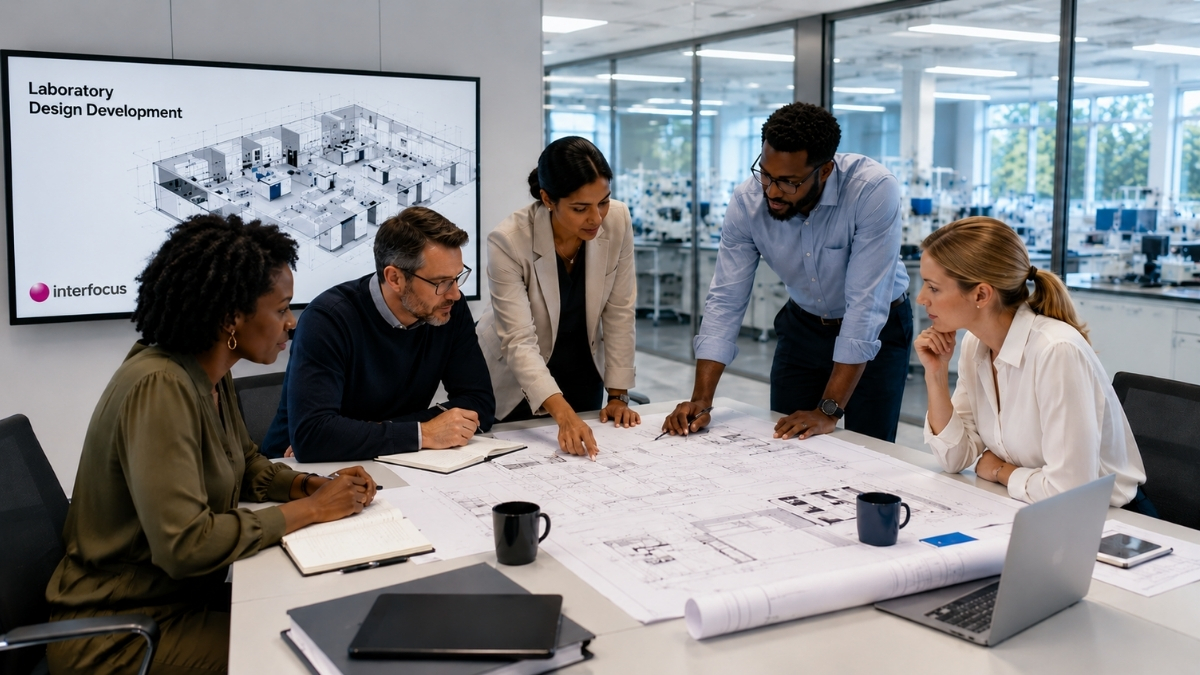
Effective laboratory design begins with a thorough understanding of how the space will be used.
Before selecting laboratory benches, furniture, or finishes, the project team should establish a clear picture of the laboratory’s operational requirements, including:
· Who will be using the laboratory?
· What activities and processes will be carried out?
· What equipment will be installed?
· How will people, materials, and samples move through the space?
· What services and utilities will the equipment require?
· How might these requirements evolve over time?
Addressing these questions at an early stage helps identify where fixed infrastructure is appropriate and where a more flexible, modular solution could deliver greater long-term value.
For project owners, this approach results in a laboratory environment that supports operational objectives and can adapt as organisational needs change. For architects, consultants, and
contractors, it provides a clearer design brief, enabling more effective coordination of the building layout, technical services, and future requirements.
Furniture is only one part of flexibility
Changing a laboratory bench is often relatively straightforward. Modifying the infrastructure that supports it can be far more complex.
Laboratory equipment frequently relies on a range of mechanical and electrical services, including:
· Power and data connections
· Laboratory gases
· Water supply and drainage
· Extraction systems
· Ventilation and environmental controls
When these services are designed around a fixed layout, relocating equipment can lead to significant disruption, downtime, and additional costs. For this reason, effective laboratory planning should consider furniture and service distribution as part of a single, integrated strategy.
To create a truly adaptable environment, key elements should be selected based on both current and future requirements, including:
· Laboratory worktop materials suited to the intended applications
· Flexible furniture systems that can be reconfigured as needs change
· Service delivery solutions that support evolving workflows and technologies
The most successful laboratories are designed with flexibility in mind from the outset. Rather than being a product decision made at the end of a project, flexibility should form part of the wider laboratory strategy, helping organisations adapt to changing research demands, new technologies, and future growth with minimal disruption.
Does every laboratory need to be fully flexible?
The honest answer is that a fully flexible laboratory layout is not always the most appropriate solution for every project.
Certain specialist applications depend on fixed workstations, permanently integrated services, or equipment that must remain in a specific location to support operational, regulatory, or safety requirements. In other cases, some laboratory areas may be designed for activities that are unlikely to change significantly for many years.
The objective is not to make every element of the laboratory movable, but rather to achieve the right balance between stability and adaptability. A well-designed laboratory provides flexibility where it adds value while maintaining permanence where it is needed most.
An experienced laboratory design specialist can help identify which areas should remain fixed, where modular furniture and adaptable infrastructure can deliver benefits, and how services can be planned to support both current operations and future change.
Plan for the next requirement as well as the current one
It is impossible to predict every piece of equipment, technology, or research programme a laboratory may need to support in the future.
However, it is possible to avoid designing a space that is limited to a single way of working. By considering flexibility from the earliest planning and design stages, clients and project teams can create laboratories that are better equipped to adapt to changing requirements over time.
A flexible approach can help minimise disruption when equipment is upgraded or replaced, simplify future reconfigurations, and enable laboratories to respond more effectively to evolving research priorities and operational demands.
InterFocus works closely with clients, architects, consultants, and contractors to design laboratory environments that support both current workflows and long-term objectives. By balancing immediate needs with future adaptability, we help create spaces that remain efficient, functional, and fit for purpose for years to come.
If you are planning a new laboratory project or reviewing an existing facility, speak to our team to discuss whether a flexible laboratory design approach could benefit your organisation.