
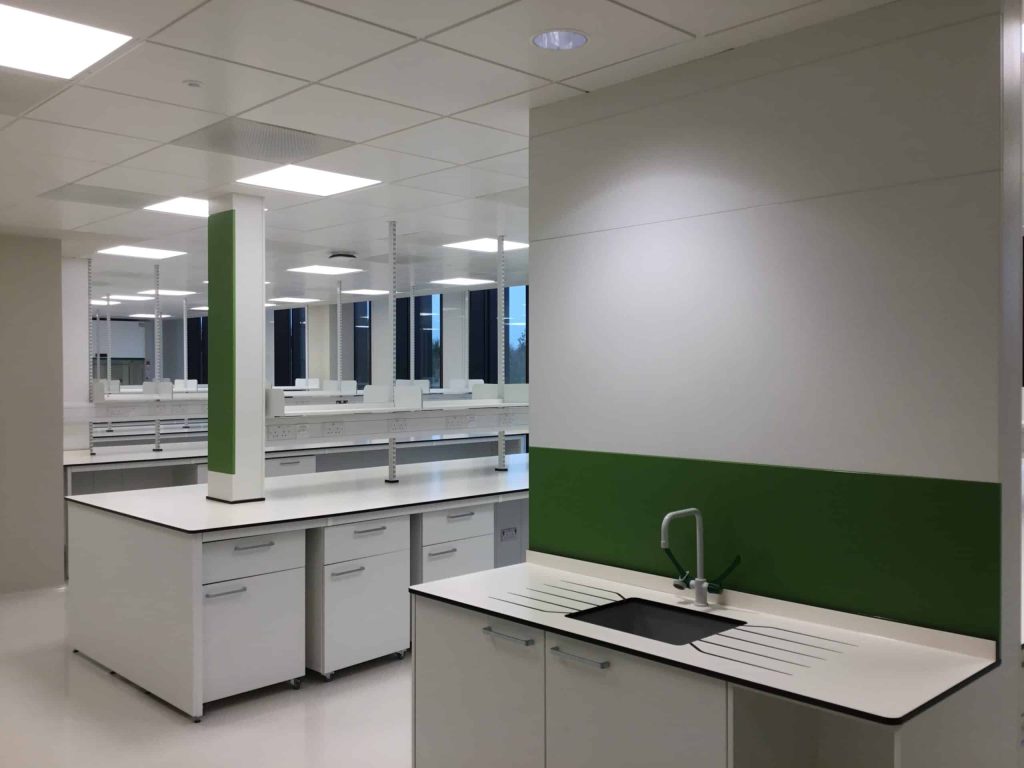
Choosing a company to help design and deliver a laboratory is different from choosing a general furniture or fit-out supplier.
A laboratory must support specialist equipment, technical services, safety requirements and the way people work every day. The right partner needs to understand how these elements connect before recommending a layout or product.
So, what should you look for when comparing laboratory companies?
1. Start with genuine laboratory experience
One of the questions InterFocus is regularly asked is how much experience we have within the laboratory sector.
It is an important question. A company may be experienced in furniture, construction or commercial interiors without understanding the specific demands of a working laboratory.
InterFocus has more than 35 years of experience delivering laboratory environments. During that time, we have worked across research, pharmaceutical, industrial, medical and research, pharmaceutical, industrial, medical and educational settings.
That experience helps our team recognise technical and practical issues that may not be obvious at the beginning of a project.
2. A good partner asks questions before suggesting products
Laboratory design should begin with the work taking place inside the space.
Before discussing furniture and finishes, a laboratory partner should ask:
- Who will use the laboratory?
- What processes will take place?
- Which equipment will be installed?
- What services does that equipment require?
- How will people and materials move through the space?
- Could the work or equipment change in the future?
- What budget and programme does the project need to meet?
These conversations create a clearer brief and help ensure the proposed laboratory is designed around the client’s requirements.
InterFocus’s laboratory planning and design service considers workflows, equipment and technical requirements alongside the available space and budget.
3. They understand that a laboratory is more than furniture

Benching and storage are important, but they are only part of a working laboratory.
Power, data, water, drainage, specialist gases, ventilation and extraction may all need to be coordinated around the equipment and furniture. The building must also have enough space and capacity to support those services.
A suitable laboratory partner should understand both the visible room and the infrastructure behind it. This helps the wider project team identify constraints early and avoid specifying a layout that the building cannot support.
The company should also be able to explain these requirements clearly. Clients should not feel they need to become laboratory-design experts before starting a conversation.
4. Look at how design and manufacturing work together
A design can look good on a screen, but it must also be practical to manufacture, install and use.
InterFocus has an in-house design team and a UK manufacturing facility near Cambridge. Keeping design and production connected allows our teams to develop standard or bespoke solutions around the requirements of each project.
It also means designers can consider how furniture will be manufactured and installed while the layout is being developed.
This connection becomes particularly useful when a project requires unusual dimensions, specialist materials or furniture designed around specific equipment.
5. Ask who will take responsibility for delivery
Laboratory projects often involve several organisations, including clients, architects, consultants, contractors, equipment suppliers and specialist installers.
Clear responsibilities and communication are essential.
For larger projects, InterFocus can assign a dedicated team focused on the project throughout its delivery. Clients also have a clear point of contact who can coordinate questions, decisions and progress across the different stages.
Where required, our turnkey laboratory design and construction service can bring planning, design, building works, technical services, furniture and installation together within one coordinated package.
This can give the client a clearer route through the project and reduce the number of separate interfaces they need to manage.
The right partner should work well with your wider team
Not every client needs a complete turnkey solution.
Some projects already have an architect, consultant or main contractor in place. In these cases, a laboratory company should be able to work as part of the appointed team and provide the specialist information others need.
That may include equipment requirements, furniture layouts, service information, manufacturing details and installation coordination.
The aim should be to support the wider project rather than complicate it.
Questions to ask before choosing a laboratory company
Before appointing a laboratory partner, it is worth asking:
- How much laboratory-specific experience do they have?
- Do they provide in-house design support?
- Will they take time to understand the end users and their equipment?
- Can they coordinate furniture with mechanical and electrical services?
- Do they manufacture their own laboratory furniture?
- Can they provide bespoke solutions where required?
- Who will manage the project?
- Can they work with your existing architect, consultant or contractor?
- Can they provide a complete solution if the project requires one?
The answers should give you a clearer picture of the company’s capabilities and how it will work with your team.
Choose a partner who understands the whole project
A successful laboratory depends on much more than the furniture placed inside it.
The right partner will take time to understand the work, the people, the equipment, the building and the budget. They will also communicate clearly with everyone involved and provide practical advice throughout the project.
If you are planning a new laboratory, refurbishment or expansion, speak to the InterFocus team about the support your project requires.
Discuss your laboratory project
Tell us what you need the laboratory to do, and our team can help you understand the design, furniture and technical requirements involved.


